Friday, May 11, 2012

Berlin


The last time I was in Germany I was with Matt. It was 2008. I had just been laid-off from my job as a newspaper reporter in California. He was working as a journalist in France. We spent a few days exploring Paris and then drove into Germany to see the tiny towns of Bavaria, where Matt had lived during his Army years. On that trip we skirted the cities, moving quickly from spot to spot, hitting the historical locations, the tourist attractions, planning and unplanning and trying to see it all.


It was just barely autumn, and I remember that the weather was perfect. I remember the exhilaration I felt when Matt drove—fast—along the autobahn. I remember being anxious about money. I remember the beer. The beer in the tiny German town of Bamberg, in particular. It was a smoked beer, a rauchbier, and, as a result, it tasted kind of like bacon. It was an acquired taste. I acquired it pretty fast.


I landed in Berlin last Wednesday afternoon for my second attempt at Germany, this time alone. I went to be part of a symposium on the sense of smell, hosted by the Einstein Forum, in the charming town of Potsdam. There were seven of us speakers, all from different corners of the small and strange world of smell. We each gave a talk, one after the other, over the course of one day. It was a long day. A fascinating day. My mind is still buzzing, in fact.


After the symposium, I spent the weekend in Berlin by myself.


While there, I walked around the fancy boutiques and funky galleries of Mitte. I meandered through the gentrified streets of Prenzlauer Berg. I visited the Neues Museum, where I saw the bust of Nefertiti, which looked just like it did on the cover of my art history textbook years ago. A local friend gave me a tour of Kreuzberg, all parks and impromptu concerts and smoky cafes, wandering along the canal in a rainstorm.


I read novels in bars, nursing a Pilsner or two. I lunched at Das Lokal with a friend of a friend, and took myself out to dinner, chatting with friendly people who sat nearby. I ate mackerel and potato salad, schnitzel and sauerkraut and pretzels, carrot soup and delicate greens, hearty breads with sour cherry jam, and more. The food was often good, sometimes great, but in the end it wasn’t the food that mattered.


It’s been a while since I’ve traveled alone. I’d forgotten the freedom of it. The in-the-moment-ness of it. The hours spanning out ahead, the hours in which anything could fill. I’d forgotten the pleasure of that. And a bit of the stress. But mainly I’d forgotten the possibility of being somewhere foreign, somewhere new, somewhere completely on my own. A lot has changed since I was last in Germany. And as I walked through the streets of Berlin—streets that burst with the musky scent of people, of brewing coffee, of car exhaust, of fresh fish and old trash and new rain—for the first time in a long time I thought: hey, okay, I can do this on my own.

Monday, April 16, 2012

Canal House Ginger Spice Cake with Dried Cherries


I spent Sunday morning reading. I don’t yet have a bookcase in my new apartment, so my books are stacked against the walls. In some ways this is a bother: I have to pull my chosen novel out of an already unsteady pile of fiction—cautiously, so that it won’t all topple over onto the floor. But because my books are in piles rather than on shelves, horizontal rather than vertical, mismatched and out of order, they look different than they ever did before, and therefore they seem new. I find myself noticing more among them.

Yesterday morning I pulled a few books out of the stacks—old books, mainly books of poetry, ones that I haven’t picked up in a long time. I read some Billy Collins. He reminds me of college, my freshman year dorm room, and the way I used to scribble my favorite quotes on Post-It notes and stick them to my wall.


I read some Robert Pinsky. I interviewed Pinsky one afternoon on the phone a few years ago. I remember him as smart and generous and quite kind. Even after we spoke, I reread his poetry for months. Today, the rhythm of his words remind me of the tiny studio in Brooklyn where I lived when I was freaking out about writing my book. That apartment was so small there wasn’t space for a sink in the bathroom. I brushed my teeth at the kitchen counter.

Finally, I read some Philip Schultz. Just a little. I had picked up The God of Loneliness, and, well, I didn’t need too much of that. But in it I read a poem called “Pumpernickel.” It’s a poem about his grandmother, and how she baked bread on Monday mornings—challah and rye, but pumpernickel was the kind that mattered. Pumpernickel was the one that “…demanded cornmeal, ripe caraway, mashed potatoes & several Old Testament stories about patience & fortitude & for which she cursed in five languages if it didn’t pop out fat as an apple-cheeked peasant bride.”


For some people, bread is just bread, and baking it seems a bit much. But it’s worth the bother, and Schultz tells us why:

“For the moment when the steam curls off the black crust like a strip of pure sunlight & the hard oily flesh breaks open like a poem pulling out of its own stubborn complexity a single glistening truth & who can help but wonder at the mystery of the human heart when you hold a slice up to the light in all its absurd splendor & I tell you we must risk everything for the raw recipe of our passion.”

I haven’t made bread in a while. Definitely not pumpernickel. But last week I did bake a cake, for Easter dinner at my mom's house. It was a ginger spice cake with dried cherries, from the most recent issue of Bon Appetit. It’s a simple cake with rich flavor—a compendium of fresh, candied, and powdered ginger; strong coffee; molasses; Dijon mustard (!); and tart dried cherries. It’s spicy and smoky and sweet and when served warm with vanilla ice cream might even be capable of pulling a single glistening truth out of its own complexity. Well, maybe not quite. But close.


Ginger Spice Cake with Dried Cherries
Barely adapted from Christopher Hirsheimer and Melissa Hamilton (otherwise known as the folks behind Canal House Cooking) in Bon Appetit

I baked this in two loaf pans, rather than in a bundt pan, so don’t be surprised that mine looks nothing like the Canal House version in the magazine. Because of this pan switch, I baked the cakes for less time then they call for, and was careful to keep a careful watch on their progress. Yes, this cake contains Dijon mustard. And black pepper. That sounds a little wonky, but the cake doesn’t taste like mustard or pepper at all. These ingredients simply heighten the soft and spicy depth of flavor, I promise. The authors recommend serving this with a “luscious chocolate icing.” I think it’s lovely with just a sprinkling of powdered sugar, or served warm with vanilla ice cream. I also think it’s nice for breakfast on its own, but that may be just me. I'm a dessert for breakfast kind of gal.

1 cup dried tart cherries, finely chopped
½ cup crystallized ginger, finely chopped
1 tablespoon finely grated peeled ginger
1 tablespoon Dijon mustard
1 cup hot, strong coffee (they recommend espresso; I made coffee in my French Press, and let it sit a bit longer than usual)
2 ½ cups flour (all-purpose)
1 tablespoon ground ginger
2 teaspoons baking soda
1 ½ teaspoons kosher salt
1 teaspoon ground allspice
1 teaspoon ground cinnamon
½ teaspoon freshly ground black pepper
½ cup (1 stick) unsalted butter, room temperature
½ cup dark brown sugar, packed
3 large eggs
1 cup molasses

Preheat oven to 350 degrees Fahrenheit. Butter two loaf pans, or one 6 – 8 cup Bundt pan. Dust the pans with flour and tap out the excess.

In a medium bowl, combine the cherries, crystallized ginger, fresh ginger, and Dijon mustard. Pour the hot coffee over the mixture and set the bowl aside.

In a large bowl, whisk together the flour, ground ginger, baking soda, salt, allspice, cinnamon, and pepper.

Using your electric mixer, cream the butter until light and fluffy, on medium speed for a couple of minutes. Add the brown sugar and beat for a couple of minutes more. Add the eggs one at a time, mixing in between. Then beat in the molasses.

Return to the cherry mixture and strain it into a small bowl, reserving the soaking liquid. Add the dry ingredients to the butter mixture in three additions, alternating with the soaking liquid, blending in between. Remove the bowl from the mixer and fold in the cherry solids. Scrape the batter evenly into the two loaf pans, or all of it into a bundt pan.

Bake the loaf pans for about 30 – 40 minutes (for loaf pans), checking carefully. The bundt pan should bake for about an hour. The top of the cake will spring back lightly when pressed in the middle. If you insert a toothpick into the cake’s center and it comes out clean, the cake should be done.

Let the cake cool in its pan on a wire rack. When ready to eat, remove it from the pan, cut it into nice fat slices, and enjoy.

Monday, April 09, 2012

Three Feet Ahead


In the last few weeks, I’ve tried to write about many things. Seared fennel things. Roasted pork chop things. Whole wheat chocolate chip cookie things. Cooking things. Eating things. The thing about how my mind wanders into the feathery netherworld of recipes, or novels, or both, when I walk along the Charles River to work. 

But I haven’t been able to get anything down onto this Word document. Not anything that isn’t a poorly veiled excuse. An attempt to kill time before I write about what I’m actually thinking about.

I’ll just get down to business. Here I go.

Matt and I broke up.

There is it. That sentence. It’s a short sentence. Just five words. Words ridiculously painful in their brevity. As I typed them, I could feel my insides seize up, clench tight, prevent me from moving, feeling, thinking beyond the sound of my fingers clacking on my computer.

Click, clack, click.

***

When Julie Powell, author of Julie and Julia, separated from her husband of seven years, she moved into a small sublet apartment. On her first night there, she ordered a pizza. “There's a New York rule, one of those we osmose through the soles of our stylish yet affordable boots, that on your first night in a new apartment, you must order takeout,” she wrote in the New York Times. There’s another rule, she added, and that is on your second night, you cook. Powell made garlic soup.

On the first night in my new apartment, the one I moved into about a month after leaving Matt, who was my boyfriend for almost five years, I didn’t want to order pizza. Or anything else. Take-out seemed too sterile, too greasy and cold.

Cooking for just one, however, felt foreign and strange. I had grown so used to cooking meals with Matt—big meals, rich meals, ones that would satisfy a burly man who believed red meat and potatoes were all you really needed to survive. I didn’t even have a table in my new place. My empty, echoing place. The apartment is a studio, but a big studio, and despite the fact that I grew up in a cavernous suburban house in farm-town Massachusetts, no place has ever felt so large.

In the end, I roasted a sweet potato on a piece of foil in the oven until it was tender and sweet. I ate it sitting on my bed. With barbecue sauce. That was all I had in the fridge.

***

They call it a “broken heart,” and it wasn’t until recently that I began to think about that term as more than a metaphor.

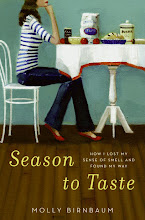
Matt and I met when I was just beginning to take my writing seriously, when I was just beginning to feel confident in my returning sense of smell, in the direction I wanted to take my career. We finished graduate school side by side, and then stayed together when I worked in California and he in Europe. He was there when I sold my book proposal. I was there when he was called back off the Individual Ready Reserves to serve his third tour of duty at war, that year in Afghanistan. He has been a huge part of my writing. A huge part of this website. A huge part of my life. In fact, I’m not sure I remember who I am alone.

At a certain point it no longer matters what happened, who is to blame for what, why, when, or how. Because in the end it’s just you. Facing the end of something, something big, something way bigger than you ever were alone. And it hurts. Emotionally, of course. But physically, it hurts, too.

In those first few weeks I remember wondering how it was possible that the decision to go our separate ways could be so physically painful. This decision didn’t touch my skin. It didn’t make contact with my muscles or my bones. Yet I sat on my bed, waiting for that goddamn sweet potato to bake, and my body ached.

Of course, I began to read.

“… [It] seems difficult to imagine that these social experiences that do not physically wound us could truly lead to the same kind of pain as a broken bone or an aching stomach,” writes scientist Naomi Eisenberger in her 2012 paper, Broken Hearts and Broken Bones: A Neural Perspective on the Similarities Between Social and Physical Pain. “However, accumulating evidence demonstrates that experiences of social and physical pain actually rely on some of the same neurobiological and neural substrates.”

So there’s evidence that the same parts of the brain light up when you feel social pain as when you feel physical pain. When Matt and I split, I felt like I was ripping my arm out of the shoulder socket, or cutting my leg off at the knee, or tearing a pattern of tiny holes in my gut, or all of that, or maybe none of that, but nonetheless it was substantial and consuming and physical all at the same time. My brain, it seems, was processing it in a similar way.

Diane Ackerman puts it more succinctly. “That’s why being spurned by a lover hurts all over the body, but in no place you can point to,” she recently wrote in the Times. “Or rather, you’d need to point to the dorsal anterior cingulate cortex in the brain, the front of a collar wrapped around the corpus callosum, the bundle of nerve fibers zinging messages between the hemispheres that register both rejection and physical assault.”

***

I’ve been re-reading Anne Lamott’s Bird by Bird. That is, in fact, what I’ve been doing this morning, this Sunday Easter morning, here at my new kitchen table, for the last hour. As I write, it’s early. My head is fuzzy. My throat feels a little swollen. I’m not sure if this is because of spring allergies, or because of the (one too many) cocktails I shared last night with my friend Mary. But it’s sunny outside. I can hear a student at the nearby music school playing the tuba—long, slow groans that should probably make me feel sad, but for some reason don’t, probably because it’s sunny, I’m surrounded by books, and this afternoon I plan to bake a cake. Filling this apartment with the warm scents of molasses and coffee and sour cherries will no doubt make me feel a bit more at home.

Anyway, Lamott’s book is important to me, as I know it’s important to countless others. I also know that I’ve written about this book before, and others have written about it, too, perhaps so much so that what I’m about to type out is insufferably cliché. But I don’t care. I’m a re-reader. Especially when I’m sad, I will return to the books that moved me, that helped to define me, that brought me to where I am today.

Lamott writes:

E.L. Doctorow once said that “writing a novel is like driving a car at night. You can see only as far as your headlights, but you can make the whole trip that way.” You don’t have to see where you’re going, you don’t have to see your destination or everything you will pass along the way. You just have to see two or three feet ahead of you. This is right up there with the best advice about writing, or life, I have ever heard.

On the next page she writes about an oft-repeated story, the title story, the one that helps her to get a grip:

... thirty years ago my older brother, who was ten years old at the time, was trying to get a report on birds written that he’d had three months to write, which was due the next day. We were at our family cabin in Bolinas, and he was at the kitchen table close to tears, surrounded by binder paper and pencils and unopened books on birds, immobilized by the hugeness of the task ahead. Then my father sat down beside him, put his arm around my brother’s shoulder, and said, “Bird by bird, buddy. Just take it bird by bird.”

That’s what I’m trying to do, too.

Friday, March 09, 2012

Nigel Slater's Sausage and Pumpkin Mash


Tuesday evening I came home from work, poured myself a glass of wine, and began to read. I was tired, so I grabbed the first book I saw, the only book I could reach from the kitchen table, which happened to be a cookbook: Nigel Slater’s Tender.

I write about Nigel Slater a lot. I know. I love him.

I had cooked from this handsome book only a few days before, when I made dinner for my mom and her boyfriend, Charley. (An aside: I feel strange continuing to describe Charley as my mother’s “boyfriend.” They have been together ten years now, lived together for 8. He helped to take care of me after the car accident. He was there when I moved to New York City, to California, to Boston. I wrote about him in my book. He’s seen me at my worst, and my best. From now on he shall be, simply, Charley.)

I cooked the simplest of dinners, one that took barely any time to throw together, but filled the house with a sweet and salty aroma, a meaty smell, a hungry smell, a scent that promised satisfaction.

I made Slater’s “Sausage and Pumpkin Mash,” and the recipe title pretty much sums it up. Sausage, roasted with a sauce made of mustard, honey, and lemon. Pumpkin, (or, in this case, butternut squash), steamed and then mashed with butter, salt, pepper, and (my addition of) a glob of sour cream. I served the dish with an arugula salad dressed in a simple lemon vinaigrette.

You see, two weeks ago Charley went into surgery to have his hip replaced. It was a quick and successful surgery. He was home within days. Charley is a stalwart fellow, and is doing okay. But a hip replacement is big, recovery happens slowly, and he has been in pain. I’ve been cooking for him and my mom a lot.

I will admit that it’s been strange to be in that house with someone who is recovering from a serious injury. Seven years ago I was hit by a car and recovered from my own injuries there, too. Months and months of slow-motion healing, lying in the bed we hoisted from the second floor to the living room, nursing my broken pelvis and fractured skull, the knee surgery that left a 9-inch scar snaking down the side of my leg. I remember feeling like a shell of a human, a cracked shell at that. I wasn’t sure I would ever be okay.

Being in that house now brings me viscerally back to those months. Remembering the mechanics of pain pills, the engineering required to climb the stairs with only one working leg. Simply the sound of Charley’s crutches moving along that particular wooden floor echoes in my ears and memory, both.

Anyway. After work, Tuesday, I poured myself a glass of wine and began to read. Slater begins this book by writing about lists. He keeps lists. Lots of them. Some on paper. Some in his head.

“One list that has remained in my head is that of favorite scents, the catalogue of smells I find particularly evocative or uplifting. Snow (yes, I believe it has a smell), dim sum, old books, cardamom, beeswax, moss, warm pancakes, a freshly snapped runner bean, a roasting chicken, a fleeting whiff of white narcissi on a freezing winter’s day.”

Yes, yes, yes.

He goes on:

“High on that list comes cress seeds sprouting on wet blotting paper. It is a smell I first encountered in childhood, a classroom project that became a hobby. Cool and watery, fresh yet curiously ancient, as you might expect from a mixture of green shoots and damp parchment, it has notes of both nostalgia and new growth about it. Sometimes, when I have watered my vegetable patch late on a spring evening, I get a fleeting hint of that scent. A ghostlike reminder of how this whole thing started.”

I immediately copied those passages down into a notebook, the scribbly old notebook I keep handy to write down just such things. It felt very important on Tuesday night. It still does, though I’m not sure why. Something about scent, of course. Scents that bring us back. That move us forward. Something about lists. The lists Slater writes. The lists I write, have written, the ones I keep in my head. Something about remembering who I was, where I was, what brought me there. Something about nostalgia. About growing, and healing, and helping each other out. Maybe I just want a vegetable patch.

Nigel Slater’s Sausage and "Pumpkin" Mash
From Tender
Serves 4, or more, depending on how hungry you are

Sausages:
8 pork sausages, plump ones
2 tablespoons grainy mustard
1 tablespoon Dijon mustard
3 tablespoons honey
2 tablespoons lemon juice

Mash:
2 butternut squash
A large knob of butter
A sizable scoop of sour cream (optional)
Salt and pepper

Preheat the oven to 400 degrees Fahrenheit. Lay the sausages out on a rimmed baking sheet, making sure that they don’t overlap. In a separate bowl, mix together the mustard, honey, and lemon juice. Pour the dressing over the sausages. Bake for 25 to 30 minutes, turning the sausages once or twice to make sure that the sauce, which will turn into a thick and sticky glaze, covers them all.

For the mash: Peel and seed the squash, and then cut the flesh into 1 – 2 inch chunks. Steam the squash pieces, covered in a large pot, for about 20 minutes, until tender. Mash the squash with a wooden spoon (note: Slater recommends giving it a whirl in a stand mixer, using the paddle attachment) in a large bowl. Add the butter, and stir until relatively smooth. Add salt, pepper, and sour cream (if using), to taste.

Divide the mash onto four plates, and balance the sausages, drizzled with their sauce, on top. Pretend you’re in Britain, and enjoy.

Saturday, February 04, 2012

Nigella's Chocolate Raspberry Pavlova


Hello.

Since I last wrote (really wrote) (uh, last year!), a lot has happened. There was Thanksgiving, then Hanukkah, and then Christmas. I brined a turkey. I ate latkas. I braised veal.  I whipped some cream to top a cloud-like pavlova that I haven’t stopped thinking about since.

It was cold, and then it was warm, and then it was cold again. There was New Years: I made gnocchi with browned butter and sage, and devoured salad with sautéed dates among good friends. I bought new (big) eyeglasses and, as a result, find myself looking at a stranger in the mirror.

My essay in O the Oprah Magazine was published (check it out!). I spoke with Christopher Kimball on America’s Test Kitchen Radio (podcasts are on iTunes!). I realized that the book I’m editing for that same company has a rapidly approaching deadline. (BTW, it’s a great book, a cookbook, on shelves this fall. I’ll tell you all about it soon.) But despite this impending due date, I first sought out and then accepted even more freelance deadlines, which I continue to struggle to meet (oy!).

This is all to say that over the last two months, I first felt energized. And then I felt tired. And then I felt sick.

A month or so ago, I came down with shingles. Yes. Shingles. Let me tell you, this is not an illness I recommend. But being sick did give me the excuse to watch 6 episodes of Downton Abbey in one go. Just as soon as I began to feel better, however, I caught a winter cold. A bad cold. One that fogged my head, stopped me up, reminded me yet again what it is like not to be able to smell. It seemed impossible that my immune system could be as nonchalant as to let anything else attack my body. But then this week I had the flu. The flu! It was only a 24-hour bug. But right now? I feel drained.

So. I’m here. And I’m going to try and stay here. I can’t make any promises. But I miss words. I miss my words. I miss that magic of sitting down and letting them come, of arranging them and rearranging them, of coaxing them to become what I want.

At least there’s always pavolva. Right?

This fall, the Culinary Guild of New England read my book in their book club, and I had the honor of attending the meeting. This particular gathering was the best of its kind: A dessert potluck. And while everything I ate there was well done, there was one dish that stuck with me. A chocolate pavolva. It was crisp yet pillowy, the sweet countered by a cloud of unsweetened whipped cream and a mound of fresh raspberries piled on top. I asked for the recipe, and was pointed to Nigella Lawson.

I thought about this pavolva for a good three months before I attempted to make my own. I mean, meringue can be finicky, and raspberries aren’t really in season. But then I did, on Christmas Day. And it was good.


Chocolate Raspberry Pavlova

Meringue can be intimidating, I know. The key is to make sure that you whip the egg whites to the desired consistency (stiff and shiny). The sugar, which you add slowly to the mix after the egg whites are satiny and smooth, delays and then stabilizes the egg foam, helping the meringue hold its shape as it bakes. The addition of balsamic vinegar (an acid) helps the egg proteins to thicken at a lower temperature, with a more tender result.
It’s important to cook the meringue slowly. After it bakes at 300 degrees for a bit over an hour, don’t remove the meringue from the oven. Instead, turn down the heat, crack the door a smidge, and let it sit until completely cool. This slow, gentle cooking helps the meringue to remain pillowy and intact. (But don’t worry if it falls in the center after baking. Mine did. The beauty of this dessert is that 1. you invert the meringue so that the smooth bottom becomes the top and 2. the whipped cream hides all imperfections anyway.)
            If you don’t have access to superfine sugar (I didn’t) it’s easy to make: Just whirl regular granulated sugar in the food processor for a bit.

6 large egg whites
2 cups superfine sugar
3 tablespoons unsweetened cocoa powder, sifted
1 teaspoon balsamic vinegar
2 ounces dark chocolate, finely chopped

2 cups heavy cream
4 cups raspberries
1 ounce dark chocolate

Preheat the oven to 350 degrees Fahrenheit. Line a baking sheet with parchment paper.

Nigella suggests outlining the shape of your 9-inch cake tin on the parchment paper in pencil, and then flipping over the paper so that when you place the raw meringue on the sheet, it won’t touch the pencil. She’s a smart lady.

Beat the egg whites in your standing mixer until soft peaks begin to form. Then, begin adding the sugar in a slow stream, beating the eggs until they are stiff and shiny.

Now add the cocoa, vinegar, and chopped chocolate to the egg whites. Mix gently, but thoroughly, with a rubber spatula.

To bake the meringue: dab a bit of meringue on the underside the parchment paper on the baking sheet to secure it in place. Then, pile the meringue batter within the outlined 9-inch circle in the center of the parchment. Use your spatula to smooth and round.

As soon as you place the meringue in the oven, turn the heat down to 300 degrees. Cook for 1 to 1 ¼ hours. The meringue is finished when it looks crisp and dry on top, but is still “squidgy,” says Nigella, when you prod it with your fingers.

Don’t remove the meringue from the oven. Instead, turn off the heat, and open the door a tiny bit. Let cool completely, at least an hour or two. (The woman who made this pavlova at the book club I attended said that she left it in the oven overnight. Just, FYI.) When ready to serve, invert the baked meringue onto a large plate and peel off the parchment.

Now, beat the cream in your standing mixer gently until it is thick and cloud-like but still soft. Pile it on top of the meringue. Scatter the raspberries on top. And then grate the remaining 1-ounce chocolate (a vegetable peeler works well, too) on top of the raspberries. Done!


Sunday, January 15, 2012

I am...


... still here. I swear. And I'll be back soon. Probably with a recipe. Maybe for this pavlova, which I made last month, and haven’t stopped thinking about since. And I’m not really a meringue person. So that says a lot.

PS. Check out the February issue of O, The Oprah Magazine if you get a chance – I’m happy to report that I have an essay (with recipes!) within.